

5 Essential Tips When Choosing a Wooden Garden Arbour for Your Outdoor Space

With so many wooden arbour styles, sizes, and designs out there, it's easy to feel a bit overwhelmed. Do you go for a corner design or a traditional straight arbour? What about trellis panels for climbing plants versus something fully enclosed? And honestly, how do you know if it'll even fit your garden without looking ridiculous?
Don't worry. This guide walks you through the five most important things to consider when choosing a wooden garden arbour for your space. We'll cover sizing, materials, design styles, placement, and those lovely built-in features that make all the difference.
By the end, you'll know exactly what to look for and which type of arbour suits your garden best.
1. Consider Your Garden's Size and Available Space
Before you fall in love with a specific design, grab a tape measure. I know, not the most exciting start, but trust me on this. Getting the sizing right is absolutely crucial. An arbour that's too large will overwhelm a small courtyard, whilst one that's too small in a sprawling garden just gets lost and looks a bit sad.
Garden arbours generally come in three main configurations: 2 seater, 3 seater, and corner garden arbour designs. Each serves different purposes and suits different garden sizes. A 2 seater is brilliant for compact spaces or if it's just you and a partner who'll use it. Three seaters work beautifully when you've got a bit more room and want to create a proper gathering spot for family or friends. Corner arbours are clever little space savers that tuck neatly into garden corners without eating up your lawn.
When measuring your space, don't just think about the arbour's footprint. You need to account for overhead clearance, especially if you're planning to grow climbing plants over it. Those roses and clematis can add quite a bit of height once they're established. Also, leave some breathing room around the arbour for access and plant growth. There's nothing worse than squeezing sideways to reach your lovely seating area because you didn't plan for the path.
Think about how the arbour will sit within your garden's layout too. Will it be tucked against a fence or wall? Positioned to create a natural arch over a pathway? Or placed as a standalone feature in the middle of your space? Each placement affects the dimensions you'll need.
Perfect for Smaller Gardens: Corner Garden Arbour Designs
If you're working with limited space, corner arbours are honestly brilliant. They maximise every inch without making your garden feel cramped. The L-shaped bench configuration fits snugly into corners that might otherwise be wasted, creating an intimate seating area that feels private and intentional.
Four Seasons Chunky Wooden Corner Garden Room & Corner Arbour
This is a perfect example of corner design done right. Handmade with thick, pressure-treated timber and featuring double bench seating arranged in that clever L-shape, you get a proper seating area without sacrificing valuable lawn or patio space. It's designed specifically for year-round use in British gardens, so it handles our weather brilliantly.
Villamoura Chunky Wooden Corner Garden Arbour
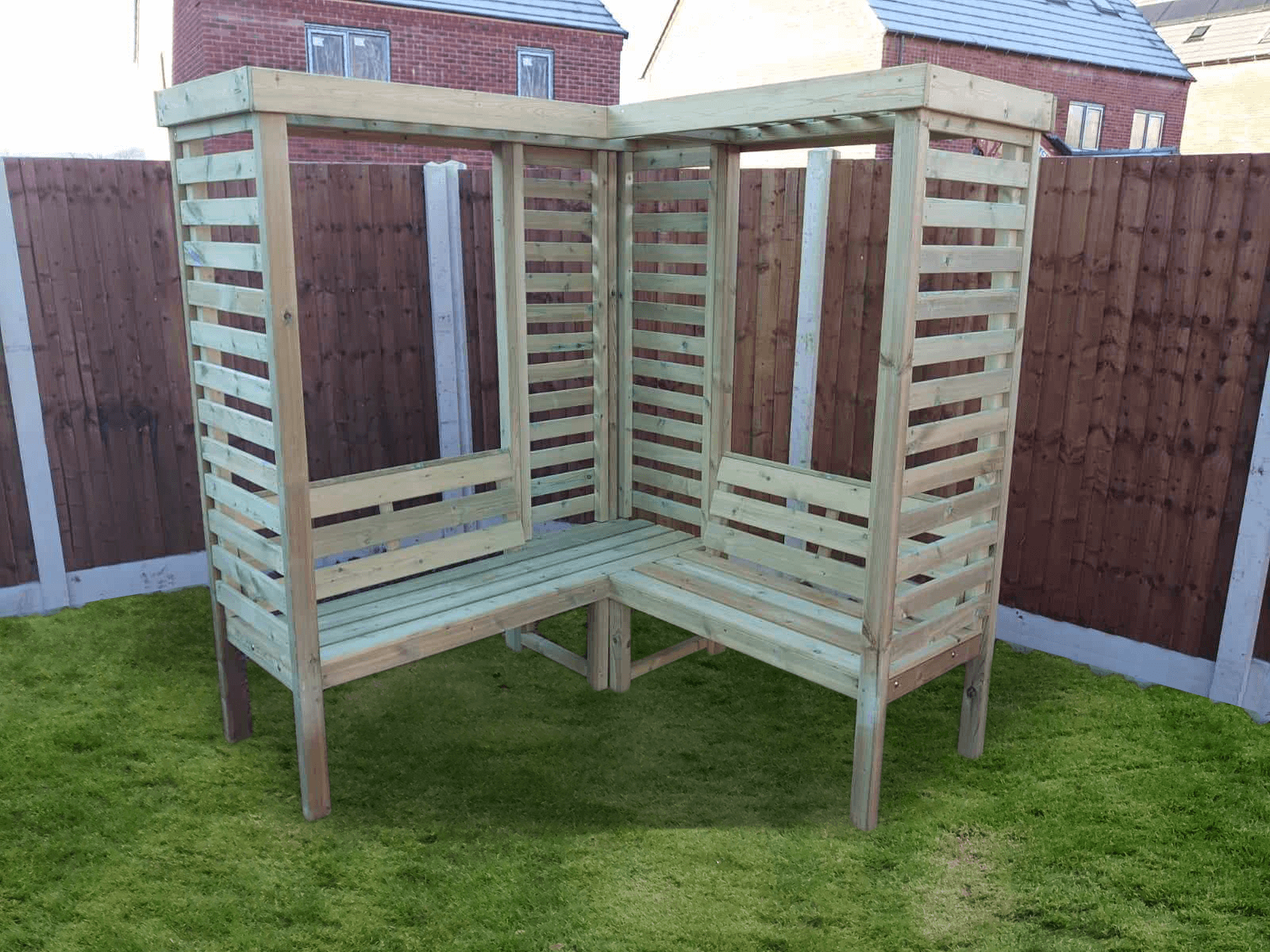
At 180cm wide, 180cm deep, and 202cm high, this gives you exact dimensions to work with when planning your space. Handmade in the UK from Swedish Redwood with an open slatted roof design, it comes with a 20-year rot resistance guarantee. When you're measuring your corner, these are the kinds of dimensions you should be thinking about.
Corner arbours naturally create that cosy, sheltered feeling we all love, and because they use space that's often underutilised anyway, they're perfect for smaller town gardens, courtyards, or narrow side returns.
Generous Seating for Larger Gardens: 3 Seater Arbours
Got a bit more space to play with? Three seater arbours create a proper focal point and give you room to spread out. They're perfect when you want to entertain friends, need space for the whole family, or just fancy a generous seating area where you can really relax.
These larger arbours work brilliantly positioned at the end of a garden path, creating a natural destination that draws people through your space. Or place one against a boundary fence or wall as a statement piece that anchors your garden design.
Cottage 3 Seater Trellis Chunky Wooden Garden Arbour
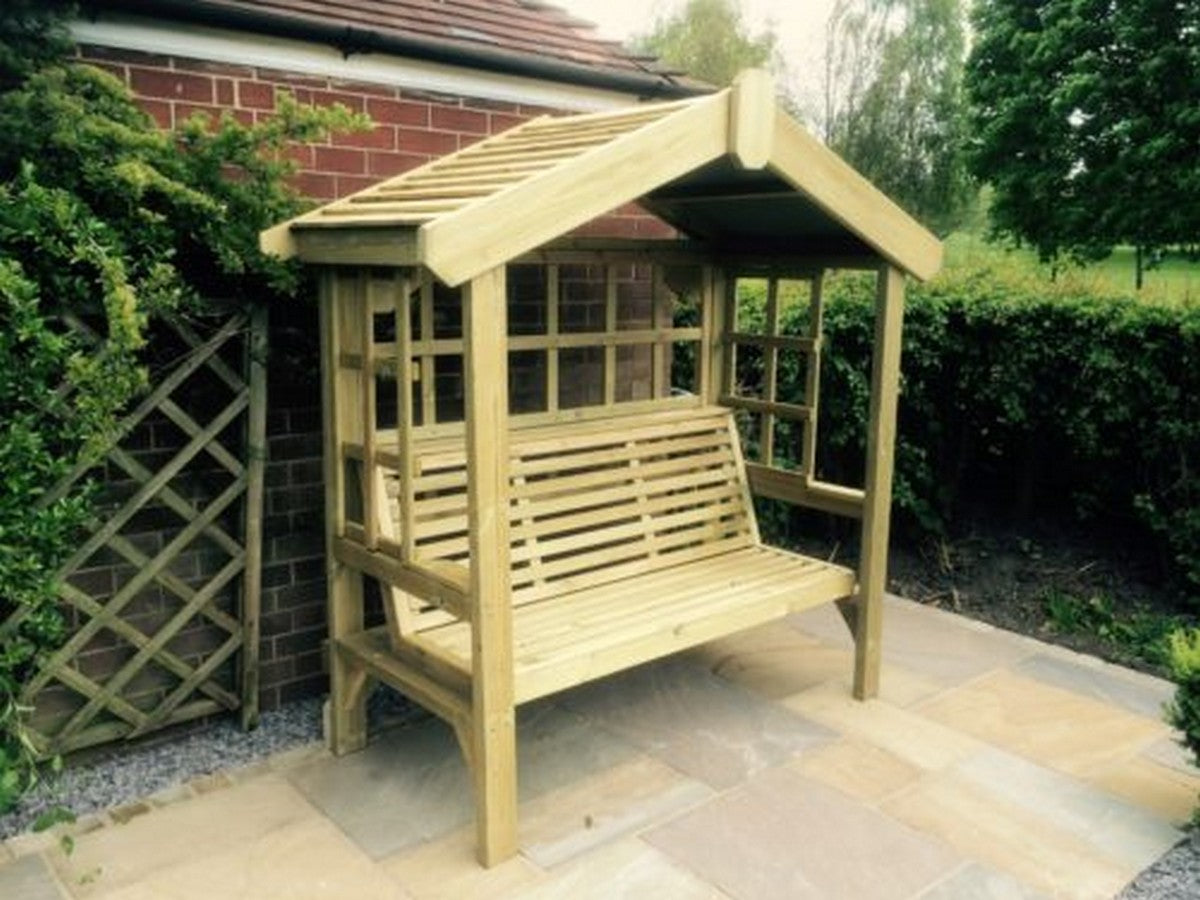
A lovely traditional design that shows what a straight arbour can do for your garden. With its cosy 3 seater bench and trellis panels on the sides and back, it transforms any spot into a peaceful escape. The thick, pressure-treated timber construction means it'll stand up to British weather year after year.
Four Seasons 3 Seat Chunky Wooden Arbour
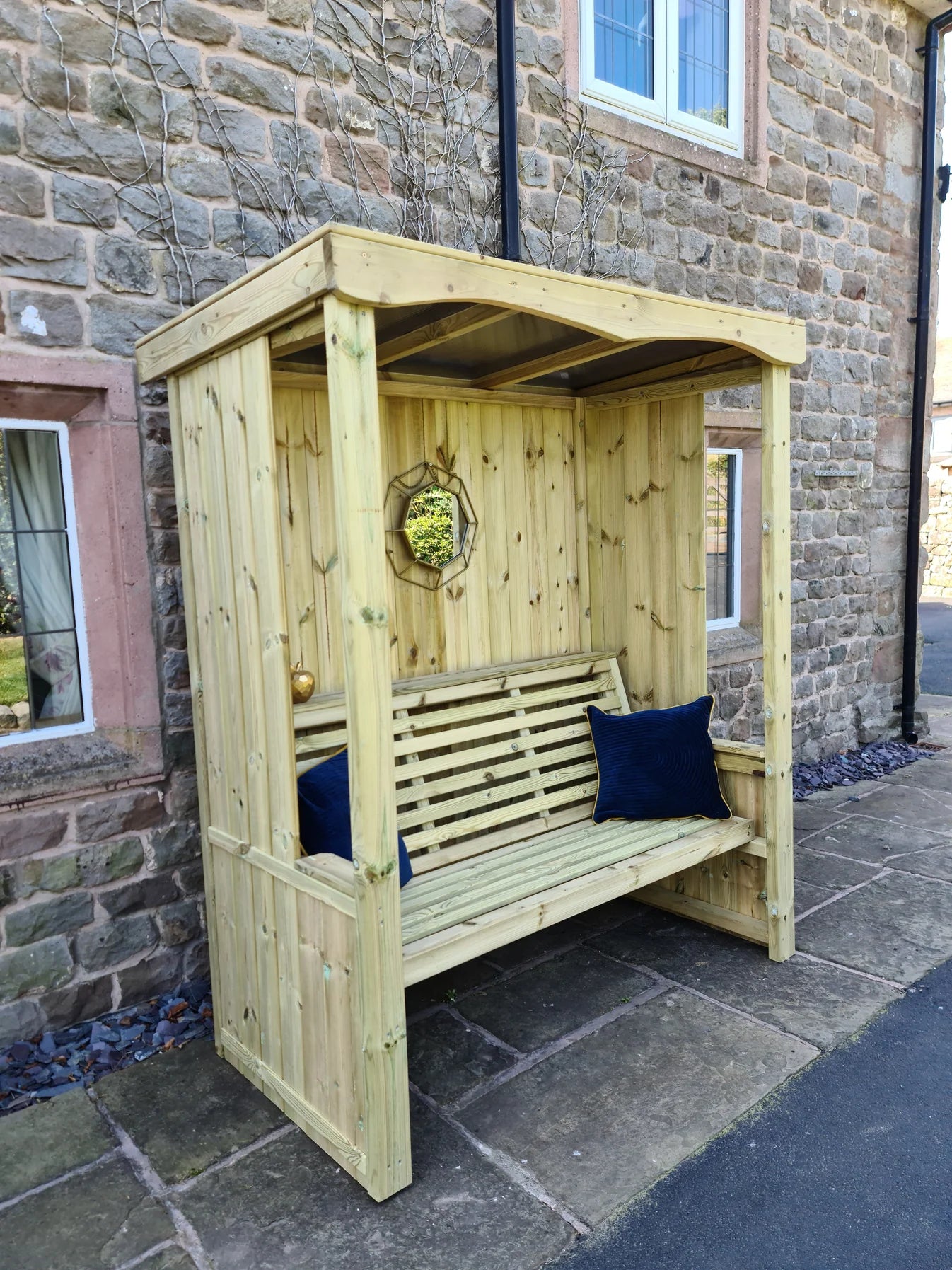
This offers generous seating with sturdy construction from sustainably sourced timber. It's ideal whether you're planning quiet afternoons with a book or lively gatherings with friends. The beauty of these 3 seater designs is their versatility. You get proper space without needing acres of garden.
When considering a 3 seater, make sure you've got clearance in front for people to walk past comfortably, and think about whether you want it accessible from both sides or positioned with its back against a wall or fence.
2. Choose the Right Material and Treatment for British Weather
Let's be honest: British weather can be brutal on outdoor furniture. We've got rain, frost, scorching sun (occasionally), and everything in between. That's why the material and treatment of your wooden garden arbour matters so much. You're making an investment, and you want it to last decades, not seasons.
Pressure treated timber is the gold standard for outdoor wooden furniture in the UK. Not all wooden arbours are created equal, and understanding what "pressure treated" actually means can save you a lot of hassle and money down the line.
The process is called tanalisation. The timber is placed in a sealed chamber where preservatives are forced deep into the wood grain under high pressure. This isn't just a surface coating that'll wash off after a few months. The treatment penetrates right through, protecting the wood from the inside out against rot, decay, fungal attack, and insect damage. It's why quality arbours can offer those impressive 20-year rot resistance guarantees.
Swedish Redwood is a particularly good choice for outdoor furniture. It's sustainably sourced, naturally durable, and responds brilliantly to pressure treatment. The timber has a tight grain and naturally occurring preservatives that work alongside the tanalisation process. It handles our temperature fluctuations beautifully and develops a lovely silvery-grey patina over time if left untreated (though you can maintain the original colour with occasional wood treatment if you prefer).
The "chunky" construction you'll see mentioned on quality arbours isn't just marketing speak. Thicker timber sections mean more structural strength and better longevity. They're less prone to warping, splitting, or twisting over time, which is especially important in exposed garden locations where wind and weather really test the structure.
Here's the good news: whilst pressure-treated arbours benefit from occasional wood treatment to maintain their appearance, they don't require constant maintenance. You're not signing up for endless weekend projects. A simple treatment every couple of years keeps them looking fresh, but even if you do nothing, that pressure treatment keeps doing its job protecting the timber.
What Does Pressure Treated Timber Mean?
So how does tanalisation actually work? The timber is loaded into a massive sealed cylinder, and air is vacuumed out. Then preservative solution is pumped in under pressure (hence "pressure treated"), forcing the chemicals deep into the wood's cellular structure. Once the pressure is released and excess preservative drained away, the timber is left to dry. The whole process takes several hours, but the protection lasts for decades.
The preservatives used are safe once the timber has dried and cured. Modern treatments have moved away from older, more toxic chemicals. What you end up with is timber that looks and feels natural but has this invisible shield against everything the British weather can throw at it.
Beatrice 3 Seater Chunky Wooden Garden Arbour
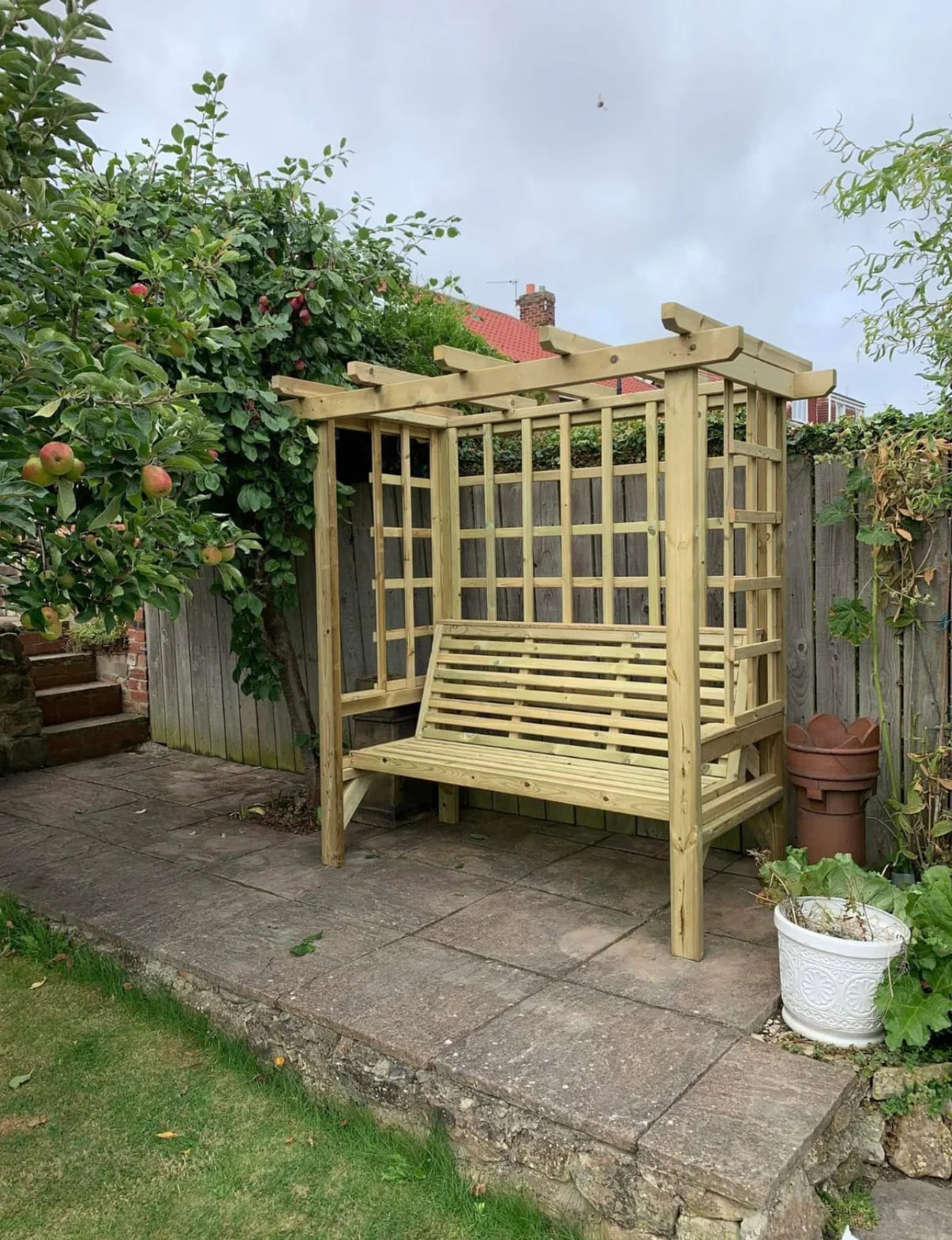
A perfect example of quality pressure treated construction. Hand-built with generous seating and that classic, timeless design, it's made to last through years of British weather. The pressure treatment means you can enjoy your quiet mornings or lazy afternoons without worrying about whether the structure will still be standing in ten years' time. It will be.
When shopping for a wooden arbour, always check that it's pressure-treated rather than just dip-treated or stained. The difference in longevity is massive. You're choosing something that'll become part of your garden for decades, so it's worth getting the materials right from the start.
3. Decide Between Open, Trellis, or Fully Enclosed Garden Arbour Designs
This is where choosing a garden arbour gets really interesting. The design style you pick completely changes how your arbour functions and feels. There are three main approaches: open slatted designs, trellis arbours, and fully enclosed structures. Each has its own character and practical benefits.
Open slatted arbours feature gaps between the roof and side timbers, creating an airy, contemporary feel. They let light and air flow through whilst still defining the space and providing partial shade. They're lower maintenance because you're not supporting heavy climbing plants, and they suit modern garden designs beautifully. The downside? Less shelter from rain and wind.
Trellis arbours have lattice panels on the sides, back, or roof that are specifically designed to support climbing plants. This is where you can create that romantic, cottage garden look with roses scrambling over the structure or fragrant jasmine creating a living canopy. Trellis designs start off looking quite structural but become more beautiful as plants establish and soften the lines.
Fully enclosed arbours have solid back and side panels, offering maximum protection from the elements. They create a cosy, sheltered retreat that works even when the weather's not brilliant. If you live in an exposed location or just want somewhere genuinely private and weather-resistant, enclosed designs are the way to go.
Your choice affects more than just aesthetics. Think about what you'll actually use the arbour for. If you want somewhere to sit and read in peace regardless of a bit of drizzle, fully enclosed makes sense. If you're a keen gardener who loves growing climbing plants, trellis is your friend. Prefer a clean, minimal look that requires little upkeep? Open slatted might suit you best.
Trellis Garden Arbours for Climbing Plants
There's something genuinely magical about sitting beneath a canopy of flowers you've grown yourself. Trellis arbours transform into living structures as climbing plants establish, and they become more spectacular each year.
The trellis panels provide exactly what climbing plants need: sturdy support with plenty of air circulation. Roses are the classic choice. Imagine sitting beneath cascading blooms of a scented climber like 'Gertrude Jekyll' or 'Teasing Georgia'. Clematis works beautifully too, especially varieties like 'Montana' that create sheets of flowers in late spring, or the later-flowering 'Jackmanii' with its deep purple blooms.
Don't overlook honeysuckle for evening fragrance, or jasmine if you've got a sheltered spot. Even something like a climbing hydrangea can look stunning as it matures, with those white lacecap flowers against dark green foliage.
The thing about trellis arbours is that they're a bit of a garden project, but in the best possible way. You plant your climbers, train them up the trellis panels, and watch as the arbour transforms season by season. It starts structural and becomes this living, breathing garden arch that changes throughout the year. That's part of the appeal.
Cottage 2 Seater Trellis Chunky Wooden Garden Arbour
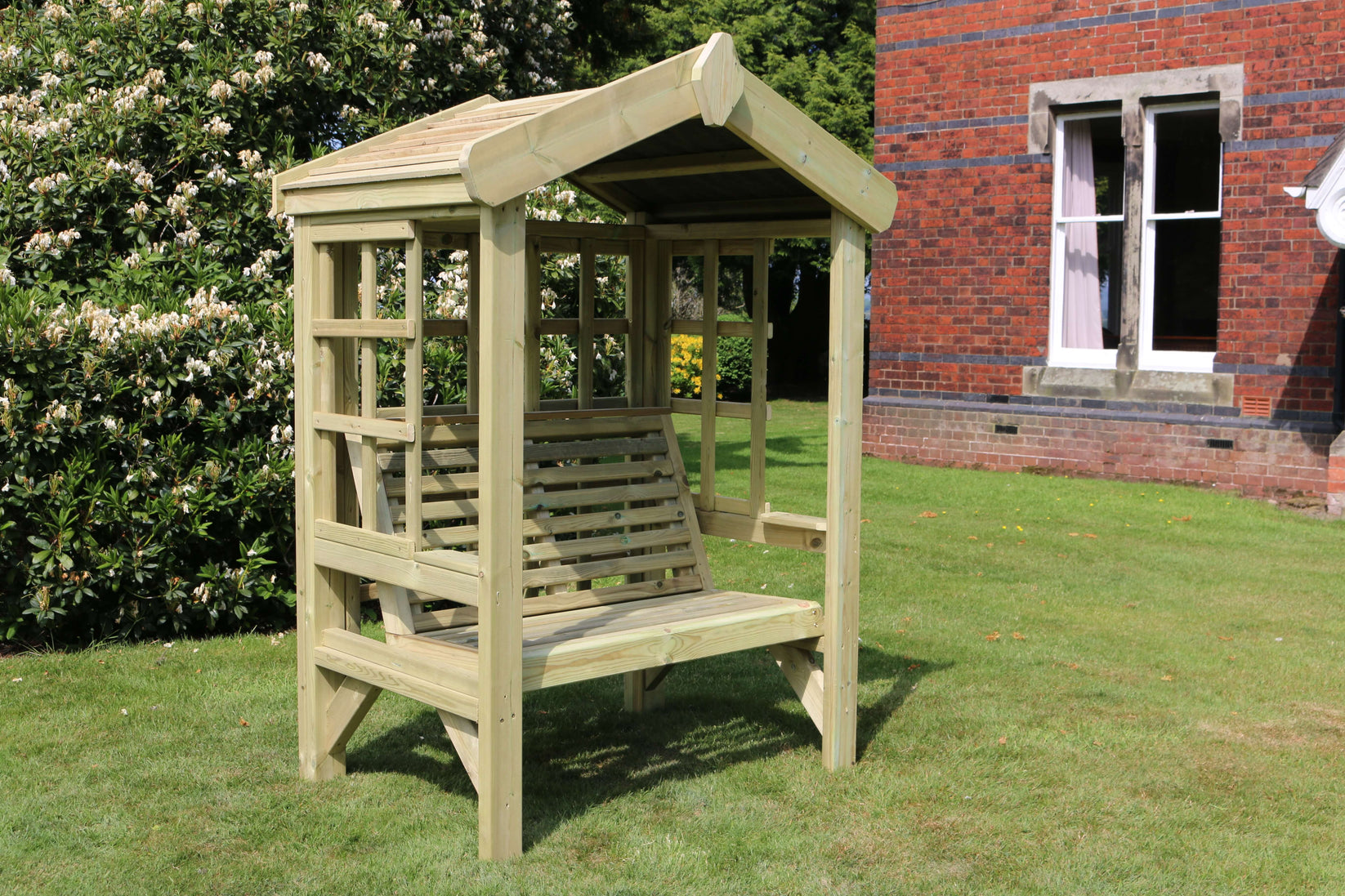
A charming example of this trellis arbour style. With trellis panels forming a sheltered retreat around the seating, it's perfect for those morning coffees or quiet conversations. The 2 seater size works brilliantly in smaller gardens, and as your climbing plants establish, it becomes an increasingly beautiful focal point.
One practical note: trellis arbours do need a bit more maintenance than open designs, simply because you'll be pruning and training plants. But honestly, if you enjoy pottering in the garden, that's half the fun. Watching your arbour bloom each summer makes it absolutely worth the effort.
Fully Enclosed Arbours for Maximum Shelter
If you want somewhere you can genuinely use year-round, rain or shine, a fully enclosed arbour is your best bet. The solid back and side panels block wind and rain far more effectively than trellis or open designs, creating a properly sheltered spot that feels like a little garden room.
This design shines in exposed gardens where the wind can make sitting outside uncomfortable. It's also brilliant if you want real privacy. Solid panels mean neighbours can't see you, and you've got that sense of being properly tucked away from the world. Perfect for reading, working on your laptop, or just sitting quietly with your thoughts.
Cottage 3 Seater Fully Enclosed Chunky Wooden Garden Arbour
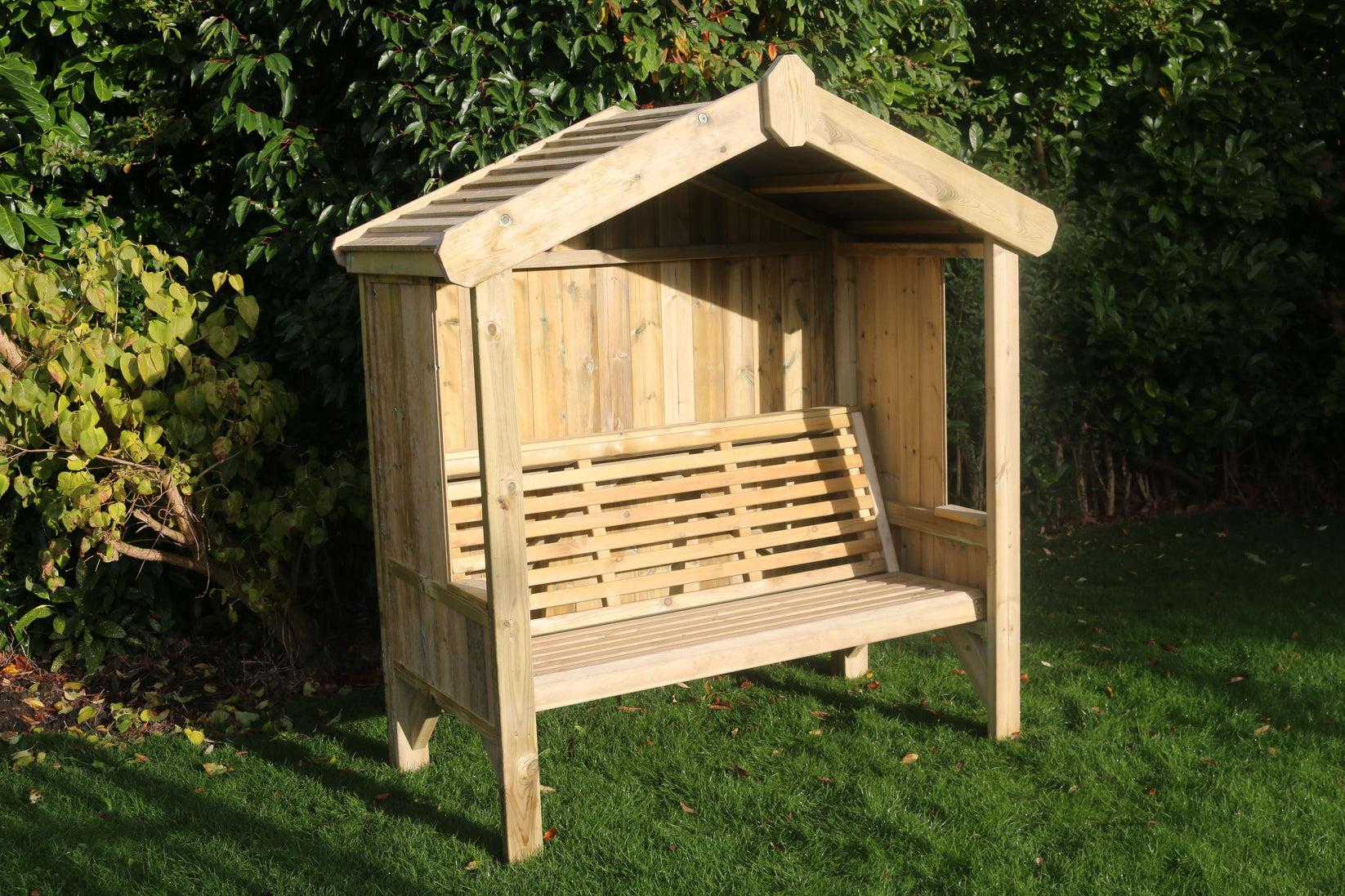
Shows this design at its best. Made from premium pressure-treated timber with that lovely rustic character, it offers proper seating rain or shine. The thoughtful details and solid construction create a peaceful retreat you'll actually use, not just admire from the kitchen window when it's pouring.
The enclosed garden arbour design also tends to feel warmer. Those solid panels trap a bit of heat and block chilly winds, meaning you can sit out comfortably earlier in spring and later into autumn than you might otherwise. Add some cushions and a throw, and you've got a genuinely cosy spot even on cooler days.
The trade off is that enclosed arbours can feel darker inside, and you won't get that airy, light feeling of open or trellis designs. But if shelter and privacy are your priorities, it's absolutely the right choice.
Open Slatted Arbour Designs for Contemporary Gardens
Open slatted arbours have a lighter, more modern feel that suits contemporary garden styles beautifully. The gaps between timber sections let light filter through, creating lovely dappled shade patterns that change throughout the day. There's something quite calming about sitting beneath a slatted roof watching those shadows move across the ground.
Because there's no trellis to support plants and the structure is relatively minimal, maintenance is straightforward. You don't need to prune climbers or worry about plants getting too heavy for the frame. The arbour looks good as it is, with the quality timber and clean lines doing all the work.
Riviera Large Chunky Wooden Corner Garden Arbour
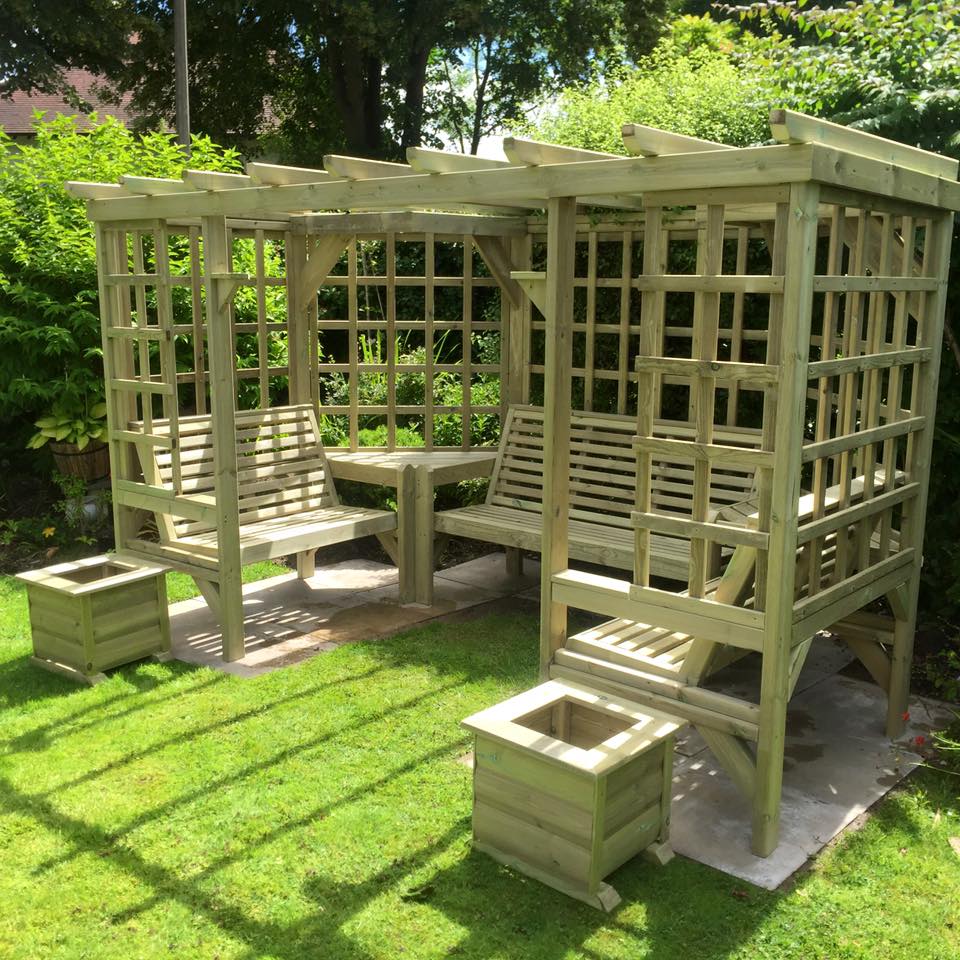
Demonstrates this contemporary arbour approach perfectly. With solid timber construction and generous seating, it's designed to be a standout feature whether you're creating a peaceful nook or a lively gathering spot. The open design keeps the space feeling bright and airy whilst still clearly defining your seating area.
Open designs work particularly well in smaller gardens where you don't want the space to feel too enclosed or dark. They also suit shaded gardens where blocking more light would be counterproductive. You still get shelter from the sun on bright days, but the structure doesn't dominate or close in the space.
The main thing to consider is that you'll have less weather protection. A bit of light rain might drift through those gaps, and you won't get the same wind protection as solid panels. But if your priority is keeping the garden feeling open and contemporary whilst adding structure and interest, an open slatted design delivers brilliantly.
4. Think About Placement and How Your Arbour Will Be Used
Where you position your garden arbour makes a huge difference to how much you'll actually use it. This isn't just about finding a spare corner. You need to think about views, sunlight, privacy, access, and what you'll primarily use the arbour for.
Start with the practical stuff. How far is it from the house? If you're planning to use it for morning coffee or afternoon tea, you don't want a trek across a muddy lawn every time. Similarly, if you'll be carrying cushions or books back and forth, easy access matters. Think about the path to your arbour and whether you need to improve it.
Sun versus shade is another big consideration. Do you want somewhere to escape the midday heat, or somewhere that catches the evening sun? Observe your garden at different times of day. That corner that's lovely and sunny at 10am might be in deep shade by 3pm. If you're planning to grow climbing plants, most flowering climbers need decent sun to perform well.
Views matter too. Position your arbour to overlook your favourite part of the garden, whether that's a beautiful border, a water feature, or just an open lawn where the kids play. You want something pleasant to look at whilst you're sitting there.
Privacy works both ways. You might want your arbour tucked away where neighbours can't see you, or you might deliberately position it as a statement piece that visitors notice immediately. Corner arbours naturally suit hidden, private spots. Larger 3-seater designs often work better as visible focal points.
Think about the arbour's purpose. Is this primarily somewhere for you to hide away with a book and a cuppa? That suggests a quiet corner position, possibly enclosed or surrounded by planting. Or is it a social space for entertaining friends? That might work better closer to the house or patio, perhaps with a more open design and easier access to the kitchen.
Creating a Focal Point vs a Hidden Retreat
These two approaches create completely different garden experiences, and your choice affects both placement and design.
A focal point arbour is positioned where it draws the eye and creates visual interest. This might be at the end of a path, centred against a boundary wall, or positioned to close the view at the end of a lawn. You want people to see it, admire it, and be drawn towards it. This placement works brilliantly for creating a sense of journey through your garden. Visitors naturally move towards the arbour, and it gives purpose and structure to the garden layout.
Statement 3-seater arbours excel in this role. They're substantial enough to hold attention without looking lost, and they create a clear destination point. If you're growing climbing plants, a focal point position means everyone gets to enjoy those blooms as they establish.
Hidden retreat arbours take the opposite approach. These are tucked into corners, positioned behind borders, or placed in parts of the garden you can't see from the house or main seating areas. The idea is to create a secret space that feels separate and private. You might position one in that awkward corner where three fences meet, or behind a mature shrub that screens it from view.
Corner arbours are naturals for hidden placement. They make use of spaces that don't work for anything else, and their L-shaped configuration naturally creates that enclosed, tucked-away feeling. You can enhance this by planting around the arbour to screen it further.
Four Seasons Chunky Wooden Corner Arbour with Decking
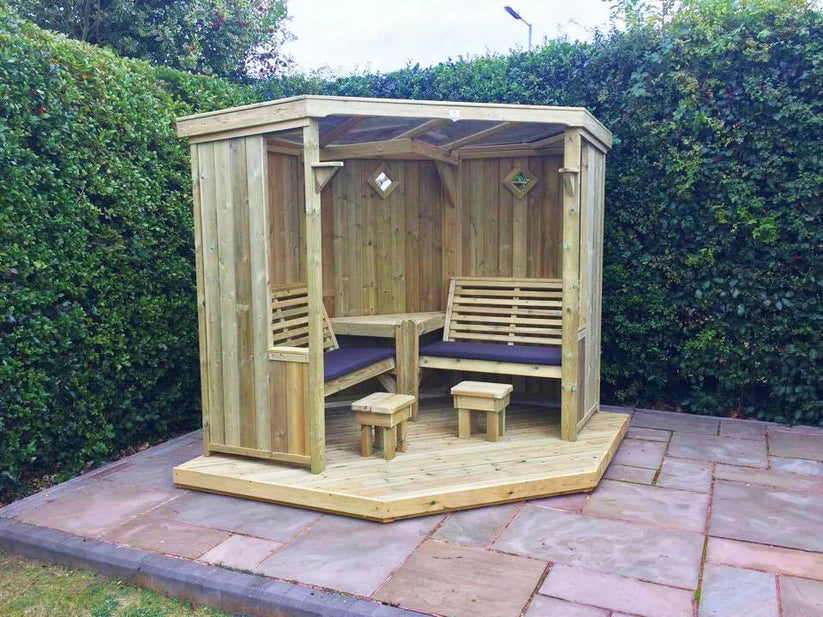
Particularly good for hidden retreat placement. The solid timber construction creates that sheltered feeling, and the included decking means you've got a complete, ready-to-use structure that works beautifully in those overlooked garden corners. It's designed to be a comfortable gathering spot for savouring your outdoor space in any season, whether people can see you from the house or not.
The beauty of a hidden arbour is that sense of discovery. Even in your own garden, walking to a spot that feels separate and private gives you a proper break from the house. It's that bit of breathing space we all need.
Which approach suits you best? If you love showing off your garden and want to create impressive views, go focal. If you crave privacy and quiet escape, go hidden. There's no wrong answer, just different priorities.
5. Consider Built-In Features and Customisation Options
The basic structure is important, but it's the thoughtful extras that transform a garden arbour from a nice piece of furniture into somewhere you genuinely love spending time. Some of these features come built-in, others you can add yourself, but they're worth considering from the start.
Built-in bench seating is pretty much standard with most arbours, and it's far more practical than trying to fit separate chairs into the space. The seating is designed to fit the arbour's dimensions perfectly, making best use of available room. Look for generous seat depth and comfortable back angles. Some designs include armrests, which add comfort but reduce the usable seating width slightly.
Storage is increasingly popular in garden furniture. Some arbours incorporate storage boxes beneath the seats, perfect for keeping cushions dry, storing garden tools, or tucking away children's toys. If your arbour doesn't have built-in storage, consider whether there's space to add a separate storage bench or box nearby.
Decking or a base platform creates a proper foundation for your arbour. It defines the space, provides a level surface, and looks far more finished than an arbour sitting directly on grass or gravel. Integrated decking is particularly convenient because it's designed to fit the arbour perfectly, and you can position the whole structure as one unit.
Customisation is where you make the arbour properly yours. Cushions and throws add comfort and inject colour. Choose outdoor-rated cushions that handle moisture, or be prepared to bring them inside when it rains. Soft furnishings completely change how the space feels, making it infinitely more inviting.
Lighting extends how long you can use your arbour into the evening. Solar lights are the easiest option since they require no wiring. String them along the roof beams, hang a solar lantern, or position solar stake lights around the arbour's base. Battery-powered LED candles create lovely ambience without fire risk.
Hanging baskets, planters, and window boxes add life and colour. Even if your arbour doesn't have trellis for climbing plants, you can still incorporate planting. Brackets for hanging baskets attach easily to the timber posts, and container plants positioned around the base soften the structure and connect it to the rest of the garden.
Think about what makes outdoor spaces comfortable for you. Is it cushions and blankets? Plants and flowers? Soft lighting? A shelf for your book and cup of tea? These details are what turn a wooden structure into your favourite garden spot.
Arbours with Integrated Decking
Decking platforms included with your arbour solve several problems at once. You don't need to prepare the ground extensively, lay paving slabs, or work out how to create a level base. The decking arrives as part of the package, designed to fit perfectly, and you position the whole thing together.
A level, stable base makes the arbour far more pleasant to use. Nobody wants seating that rocks or feels uneven. Decking also defines the space visually, creating a clear boundary between "arbour area" and "rest of garden." It looks more intentional and finished.
Practically speaking, decking keeps your feet dry and clean. You're not stepping from grass (which might be wet or muddy) directly onto the arbour seating. There's a transition zone that makes the space feel more like a proper outdoor room.
If your chosen arbour doesn't include decking, consider whether you want to add it separately. It's not essential but it does enhance both the look and the usability of the space significantly.
Bringing It All Together: Finding Your Perfect Garden Arbour
So there you have it. Five essential considerations that'll guide you to the right wooden garden arbour for your space. Let's quickly recap what we've covered.
First, size matters. Measure your space carefully, think about whether a 2-seater, 3-seater, or corner design suits your garden best, and remember to allow room for access and plant growth. Second, materials and treatment are crucial for longevity. Look for pressure-treated timber, preferably Swedish Redwood, with those impressive rot resistance guarantees. It's the difference between an arbour that lasts decades and one that disappoints after a few years.
Third, design style affects both function and aesthetics. Trellis arbours support climbing plants and create that romantic garden arch look. Fully enclosed designs offer maximum shelter and privacy. Open slatted structures suit contemporary gardens and need less maintenance. Pick the one that matches your garden vision and practical requirements.
Fourth, placement transforms how much you'll use your arbour. Think about views, sunlight, privacy, and access. Decide whether you want a focal point that draws the eye or a hidden retreat that feels separate and private. Fifth, those built-in features and customisation options make all the difference to comfort and usability. Consider decking, storage, and how you'll personalise the space with cushions, lighting, and planting.
The beauty of choosing a quality arbour is that you're making a long-term investment in your garden. These aren't temporary features. A well-made wooden garden arbour becomes part of your outdoor space for decades, improving with age as the timber weathers and any climbing plants establish. The initial cost might seem significant, but spread over twenty or thirty years of use, it's genuinely excellent value.
Don't get too hung up on finding the "perfect" arbour. Focus on your top two or three priorities. Maybe it's weather protection and space-saving design. Perhaps it's trellis panels for growing roses and generous seating for entertaining. Identify what matters most to you, and that naturally narrows down your options.
Every arbour in our range is handmade here in the UK specifically for British gardens and British weather. That means they're designed with our climate in mind, built to handle everything from summer downpours to winter frosts. You're not gambling on whether something will cope with UK conditions. These arbours are made for them.
Quality wooden garden furniture improves your outdoor living in ways that are hard to quantify. It's about having somewhere to sit and properly enjoy your garden, not just look at it through the window. It's about creating space for quiet relaxation or lively gatherings. It's about adding structure and interest to your garden design. An arbour does all of that whilst looking beautiful and lasting for decades.
Browse our full collection of wooden garden arbours to explore the range of sizes, styles, and designs available. From compact 2-seater corner designs perfect for courtyard gardens to generous 3-seater statement pieces ideal for larger spaces, there's an arbour to suit every UK garden and every gardener's needs.
Your Garden Arbour Journey Starts Here
Choosing the right arbour for your outdoor space doesn't have to feel overwhelming. With these five tips guiding your decision, you've got a clear framework for finding exactly what you need. Whether you're after a cosy corner retreat, a sheltered reading nook, or a statement piece covered in fragrant climbing plants, the perfect garden arbour is out there waiting.
The process we've walked through helps you make an informed choice you'll be happy with for years to come. You'll know it's the right size for your space, built from materials that'll stand the test of time, designed in a style that matches your vision, positioned where it works best, and customised with those thoughtful touches that make it truly yours.
Garden arbours handmade in the UK from sustainably sourced, pressure-treated timber represent quality you can rely on. These aren't mass-produced imports that might not survive a British winter. They're crafted specifically for our gardens, our weather, and our outdoor living needs. That attention to quality and suitability means you're genuinely getting decades of enjoyment from your investment.
So take your time, think through what matters most for your garden and how you'll use the space, and choose the arbour that ticks your boxes. Your outdoor space is about to get a whole lot more inviting.


